The post 19 Ideas for Your Summer Bucket List appeared first on lifesfouhealth.com.
]]>Summer is a particularly fertile time for bucket lists – both making for dreaming them up and for checking off items on them. The days are longer, our lives tend to slow down, and summer provides outdoor opportunities that colder months cannot. Here are some ideas for your own summer bucket list – many of which have been on my own previous lists, and many of which I am now happy to say are no longer sources of longing or regret because they have been incorporated into my routine.
1. Make homemade lemonade. Add a shot of gin and a splash of seltzer and you’ve got a refreshing summer cocktail – a fresh version of a Tom Collins.
2. Grow mint in a pot (mint does particularly well in containers), and when you’ve got a bunch, make mojitos.
3. Plant a pot of petunias AND resolve to trim off the dead flowers once per week to keep them bushy (as opposed to leggy).
4. Instead of packaged coconut water, try a real “fresh young coconut” – drink the water and scoop out the flesh, or put the water and the flesh in the blender for a perfect, totally fresh, totally natural smoothie.
5. Take a late afternoon nap outside.
6. Bring your yoga mat outside and do your practice outdoors. Be prepared to sweat.
7. Take your dog on a hike.
Read more about keeping your pets cool this summer
8. See Shakespeare outside – my favorite is Midsummer’s Nights Dream because it’s set in a forest, so seeing it outside feels appropriate.
9. Grill a whole fish: with capers, olive oil, garlic and a sliced fennel bulb, or, like this.
10. Make a Korean Barbecue.
11. Buy sidewalk chalk and draw away!
12. Take the same chalk and make a hopscotch. Play!
Read more about healthy activities for kids
13. Try paddleboarding.
14. Organize a nighttime game of flashlight tag.
15. Go camping with a tent – in your backyard if you need to start there.
16. Declare a blow-dryer embargo for the entire summer.
17. Take a one-hour break from the internet every single day.
18. Make a homemade kite.
19. Build a drip-castle – kids not necessary.
Read more about summer foods to beat the heat
So, what's on your summer bucket list?
Image via Moyan_Brenn
The post 19 Ideas for Your Summer Bucket List appeared first on lifesfouhealth.com.
]]>The post 9 Grounds On Which To Defend Your Morning Coffee appeared first on lifesfouhealth.com.
]]>1. The Cure For the Common Cold
OK, well, maybe not a cure, but coffee has been found to reduce feelings of “malaise” in people suffering from the sniffles.
2. A Natural Alternative to Ritalin
At least one physician-run mental health treatment facility recommends coffee as an alternative treatment for Adult Attention Deficit Disorder for those who are not comfortable with psychotropic drugs.
3. Banish the Blues
Coffee drinking has been linked to lower rates of depression, at least among women. Coffee can also be incorporated into self care and "me time" with a relaxing morning routine that leaves you ready to face the day.
4. Encourage “Regular Movement(s)”
Anecdotally speaking, lots of people rely on their morning cuppa joe to get things “moving”. Well, scientifically speaking, it’s been reported that coffee consumption can speed the return of bowel function following abdominal surgery.
5. Reduced Risk of Certain Cancers
Coffee consumption has been linked to a lower risk of developing both prostate cancer (in men) and uterine cancer (in women).
6. Reduced Rate of Death From Oral and Throat Cancer
A 25-year study demonstrated a link between coffee drinking and a reduced mortality rate from cancers of the mouth and throat.
7. Your Liver May Thank You
Coffee drinking has been associated with better readings on liver function tests and an improved response to Hepatitis C treatments. It may also confer some degree of protection against liver cancers.
8. Decreased Risk of Dementia
If you’re still not drinking coffee, you might want to start by the time you hit 40, as a link has been demonstrated between coffee drinking in midlife and a reduced risk of Alzheimer's and other forms of dementia later in life.
9. Decreased Risk of Parkinson’s Disease
Coffee drinking has been associated with a moderate decrease in occurrence of Parkinson’s Disease.
Of course, too much of a good thing is never a good thing. It’s been suggested that adults limit their coffee intake to no more than a few cups per day (even less for pregnant women), and, of course, anyone with known health concerns should consult with their own physician.
READ MORE: 5 Herbs That Help Fight Fatigue >>
The post 9 Grounds On Which To Defend Your Morning Coffee appeared first on lifesfouhealth.com.
]]>The post Grilled Summer Fruit Recipes: Easy as Pie (and Healthier) appeared first on lifesfouhealth.com.
]]>Identify which fruit to grill:
For grilled summer fruit, you’ll want to stick with stone fruits, tropical fruits like pineapples and bananas, and late summer offerings like pears and apples. Berries tend not to stand up to grilling.
Read more about the best fruits for staying hydrated
Pick your particular fruit:
Go for the pieces that aren’t perfectly ripe. This will keep your fruit from falling apart on the grill.
Cut your fruit:
For most fruits you will leave the skin on. Bananas and pineapples are an obvious exception. For most, you will simply cut in half. For fruits with seeds inside such as apples and pears, cut in half vertically and remove the pits. For bananas, slice lengthwise – or even not at all. For stone fruits, slice down the middle and remove the stone.
Soak your fruit:
Soak your fruit in water spiked with lemon (1 cup of water to 1 teaspoon of lemon juice) for 20-30 minutes. This will help your fruit retain its color and stay juicy while on the grill. Once you have cut the fruit, soak it in water to maximize the amount of liquid inside the fruit so it stays juicy on the grill.
Optional Flavor:
You can add rum, bourbon or brandy to the water for flavor, if you are serving adults. And be prepared for the grill to flare up when you put the fruit on. You can add spices to your water to mimic the flavor of the “pie” you are deconstructing. For apple pie, add cinnamon, nutmeg, cloves, etc. For peach pie, try a splash of vanilla or almond extract and a few crushed cardamom seeds. Or you can take an adventurous approach, pairing rosemary with pineapple or apricot or basil with banana.
Prep your grill:
Heat your grill to medium and make sure your grates are spotless – as the taste of porterhouse tends to ruin the taste of grilled peaches.
Prep your fruit:
Lightly spray or brush with oil (nut oils are a good choice here as they complement fruit, as opposed to olive oil which may not).
Grill your fruit:
Grilling times vary widely per fruit, so follow the grilling times here.
Read more barbecue recipes
Enjoy your grilled fruit:
It will be very hot when it comes off the grill, so topping with ice cream is, well, only humane, right?
If you would like us to share specific grilled summer fruit recipes, let us know in the comments below which types of fruits you’re interested in grilling!
Photo Credit: sfllaw
The post Grilled Summer Fruit Recipes: Easy as Pie (and Healthier) appeared first on lifesfouhealth.com.
]]>The post 3 Easy Grow-Your-Own Foods Guaranteed to Impress Your Friends appeared first on lifesfouhealth.com.
]]>I’m not talking about digging up the backyard and growing my own vegetables here. As fantastic as that may sound, the realities of sunlight and son-likes (my boys “need” that sunny patch of grass for pitching practice and lacrosse tosses) have forced me to think outside the box…and into the container, as it were…as in container gardens of home-grown herbs.
You too can grow your own. Just buy a few “babies”, transplant them into your own organic soil-filled pots at home, and watch them grow. In just weeks, you’ll have enough to invite your friends over for an impressive (but easy…shhh) dinner that you not only made yourself, but also grew yourself. Be prepared to earn a reputation as am impressively elegant DIY-er.
Read More: 10 Fruits and Veggies Perfect for Planting with Kids
1. Mint
Mint is fast and easy growing and looks and smells great. Crush some into an iced tea, or serve up these Mint Juleps, preferably on the veranda (if you have one).
What you’ll need to make a Mint Julep:
Fresh mint sprigs
Water
Ice
Bourbon
In a saucepan, heat one cup of sugar with one cup of water to boiling. Boil for a five minutes, no stirring. Remove from heat, muddle in a handful of mint leaves, then allow to cool and strain into a pitcher. Add 16 ounces of bourbon, a cup of water and a cup of ice, preferably crushed. Stir, pour, and garnish with mint.
Read More: 5 Great Tips for Starting a Spring Organic Garden
2. Rosemary
Hearty rosemary is a great plant for container gardening year-round. Bonus, rosemary has been shown to help reduce the harmful effects of grilling. Grab your kitchen shears and whip up this Rosemary Rub to flavor your protein of choice.
What you’ll need to make a Rosemary Rub:
1/4 cup of fresh rosemary
3-4 cloves of garlic
1 1/2 teaspoons sea salt
1 teaspoon freshly ground black pepper
Mince the rosemary, garlic, salt and pepper to make a paste (a mortar and pestle comes in handy and looks very impressive here). Massage into your choice of protein and allow flavors to marry at room temperature for at least 10 minutes before roasting or grilling your meat or fish.
3. Basil
Basil grows big – and fast! Toss into a tomato salad, or make this Basil Pesto as a condiment.
What you’ll need to make Basil Pesto:
2 cups fresh basil leaves (packed, remove stems)
2 garlic cloves
1/4 cup extra virgin olive oil
1/4 cup pine nuts and/or 1/4 cup organic Parmesan cheese (optional)
Sea salt and freshly ground black pepper to taste
Food processor or blender
Throw all ingredients into your blender or food processor and blend it up! The cheese and pine nuts are optional, but both provide softness to counter the garlic. Serve the pesto as a condiment for the protein (and/or grilled vegetables and/or crusty bread). If you want to add a little adventure to your gardening and your pesto-ing, try these unique pesto recipes.
The post 3 Easy Grow-Your-Own Foods Guaranteed to Impress Your Friends appeared first on lifesfouhealth.com.
]]>The post 4 Weird Types of Fruits You Have To Try appeared first on lifesfouhealth.com.
]]>But who wants to take that leathery purple orb in hand and look like a novice, asking questions like, “what is this thing?” and “is it edible really?” Well, fear not: I took it upon myself to do that for you. All you need is to read up on these four weird types of fruit, march into your specialty food store and fearless toss these babies in your cart, knowing what delights await.
Read more about the healthiest fruits and vegetables

Mangosteen is known in Thailand as the “queen” of all fruits (we will discuss the king next). Mangosteen looks like a purple, leathery orb with a vivid green stem. Inside, the flesh is white like a lychee (discussed below) and segmented like an orange. Rich in vitamin C and containing rare vitamin B- complexes, the New York Times did a write up on mangosteen that described it as “thrillingly, intoxicatingly luscious” and “evocative of the exotic East, with so precise a balance of acid and sugar.”
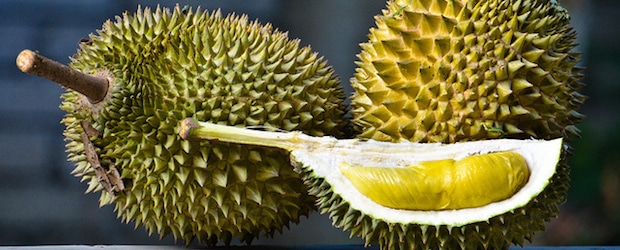
Durian is the “king” to mangosteen’s queen. Anthony Bourdain – celebrity foodie – is a fan of its rich, buttery, creamy flavor and texture. Others call it “fruit crack”, swearing that durian gives them a full body “high”, eases anxiety, heats them up and puts them "in the mood".
But let me not mislead you: durian is known also for its aroma, although the word “aroma” may be misleading, if you consider the essence of dirty gym clothes marinated in garlic and garbage to be more of an odor than an aroma. I mention the smell as an aside because it has done nothing to dissuade durian’s fans, for whom a mere waft of stink is nothing compared to the texture and the thrill of this weird type of fruit.
Those in the know recommend mangosteen after durian – to cool down after heating up. The mangosteen is considered the yin to durian’s yang and can be incorporated into an ayurvedically balanced diet.

If you’ve ever seen what appears to be an undergrown orange about the size and shape of an olive, you’ve seen a kumquat. With a sweet rind and sour flesh, some toss the flesh and eat only the rind. Some eat both to highlight the contrast.
Read more about summer fruits and veggies to keep you hydrated
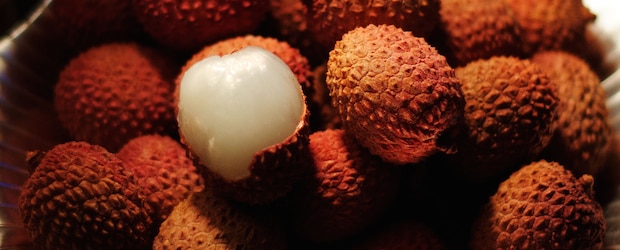
A lychee is a perfect example of how looks can be deceiving. Lychees look like really huge strawberries but with hard, bumpy red shells. But peel off that shell, and inside is a fragrant, glistening snow-white fruit with a sweet and light taste and texture somewhere between a plum and an orange. Inside the flesh is small black pit that is so smooth, it’s jewel-like. Alas, it’s just a pit.
Top Image: Jaina (lychee)Image: Matt Saunders (mangosteen)
Image: Mohd Hafizuddin Husin (durian)Image: Dave Morris (kumquat)
Image: Annemarie Hofer (lychee)
The post 4 Weird Types of Fruits You Have To Try appeared first on lifesfouhealth.com.
]]>The post Cornmeal Pancakes Recipe with Fresh Summer Blueberries appeared first on lifesfouhealth.com.
]]>Since I grew up in a family that ate simply roasted meats and steamed vegetables for dinner, I went down to dinner that first night expecting something familiar. Sadly for me, it was a casserole. With my expectations set to low, the next morning I was pleasantly surprised: breakfast was an Amish cornmeal pancakes recipe topped with blueberries. Although the notion of blueberry pancakes was nothing new to me, the cornmeal pancakes was. I was captivated by the lightly nutty, crispy edges that concealed their tender texture. I still am.
Read more about the benefits of berries
Cornmeal need not be made from genetically modified corn – simply look for the “organic” and the “non-GMO” labels. Cornmeal is also naturally gluten-free. Cornmeal is a rich source of fiber and vitamins, and low-fat buttermilk is a rich source of calcium, potassium, and probiotics.
So, savvy readers, you can feel extra good about these cornmeal pancakes, especially with those yummy blueberries heaped on top.
makes 6 servings
Ingredients:
3/4 cup flour
3/4 cup stoneground organic cornmeal
2 tbsp NOW Real Food Sugarless Sugar
½ tsp baking powder
½ tsp baking soda
½ tsp salt
3 tbsp Maison Orphée Organic Sunflower Cooking Oil
2 large eggs
1¼ cups buttermilk
Read more about studies on GMO corn
Directions:
Combine all dry ingredients with a fork. In a separate bowl, combine liquid ingredients with a whisk. Add liquid to dry ingredients, mixing just until blended. Use a large, heavy griddle, if possible. Coat with oil (butter burns too quickly), heat over a medium flame. Test whether it’s ready by flicking a drop of water onto the pan. Only when it dances then evaporates, are you good to go. For each pancake, pour a ¼ cup of batter. Cook for 90 seconds and flip (bottom should be golden). Cook another minute and remove from heat, serve, and repeat. Heap those blueberries on with pure maple syrup, and enjoy!
Image: totoro friend
The post Cornmeal Pancakes Recipe with Fresh Summer Blueberries appeared first on lifesfouhealth.com.
]]>The post 7 Benefits of Cherries (As if You Needed Even One Reason!) appeared first on lifesfouhealth.com.
]]>Cherries are a natural source of melatonin, a hormone that helps regulate our sleep-wake cycle. Although melatonin is produced in the body, melatonin supplements are sold over-the-counter to induce sleep and improve sleep duration and quality. But whereas melatonin supplements come with potential side effects, including headaches, nausea, strange dreams and next-day grogginess, cherries do not. Sleep researchers recommend eating cherries an hour before bedtime. (It totally works for me.)
Speaking of melatonin, researchers have detected that people who have heart attacks tend to have very low levels of melatonin, which the consumption of cherries can help boost. Another compound found in cherries – known as polyphenols – has been shown to be beneficial in preventing the formation of blood clots. Yet another compound found in cherries – known as anthocyanins – has been shown to protect blood vessels from oxidative stress, implying that the consumption of cherries may help prevent the formation of arterial plaque.
The same compounds mentioned above – melatonin, polyphenols, and anthocyanins — have been shown to support healthy brain function. All three have been shown to protect brain cells from oxidative stress and may play a role in preventing various forms of dementia.
Researchers from Johns Hopkins Hospital report that anthocyanins reduce inflammation about as well as the prescription drug, Indocin – a powerful non-steroidal anti-inflammatory (also known as NSAIDs). But whereas Indocin comes with a set of warnings (heart attack, stroke, intestinal bleeding), cherries do not.

Research shows that consuming cherries may help athletes to cut down on post-workout muscle pain, which can add up to more consecutive training days and less downtime. This effect was demonstrated in connection with both distance running and strength training.
When patients with gout – a complex and very painful form of arthritis – consumed cherries over a period of just two days, their risk of an attack of gout was down 35 percent compared with those who did not consume cherries.
The anthocyanins in cherries have been shown to slow the growth of cancer cells and stimulate their self-destruction. Specifically, cherry anthocyanins have been shown to slow the growth of colon cancer cells.
Cherry season is in full swing right now. Treat yourself to a few. Or, a lot!
Photo Credit: Ed Ivanushkin
The post 7 Benefits of Cherries (As if You Needed Even One Reason!) appeared first on lifesfouhealth.com.
]]>The post The Tao of Gardening appeared first on lifesfouhealth.com.
]]>Taoism is a nature-based philosophy, as opposed to a theologically-based philosophy. To paraphrase Lao Tzu, nature is the ultimate truth, notwithstanding the ultimate irony that our observation of nature removes us from it. We cannot “be” nature, itself, but in “not” being, we are already in the process of becoming: “If you want to become whole, let yourself be partial,” the Tao Te Ching states, “If you want to become full, let yourself be empty.”
Nowhere have I felt the visceral truth of these notions more keenly than when I have gone from observing nature from a distance to experiencing nature first-hand – literally, in my hands, in the form of gardening.
Read more about backyard organic gardening
When I first anticipated moving from the city to the country, I couldn’t wait to have a beautiful flower garden. I became a self-professed expert on all flowers – I knew what I liked and I knew what I would plant. But after moving in and making my first trip to the nursery, I set the pots down on the dirt and promptly called a handyman. I couldn’t dig in dirt – what did I know about dirt? What could I possibly want to know about dirt?
Still, as I watched the handyman make quick work of his hole-digging and plant plopping, something felt amiss. Sure enough, over the course of that summer, I watched my new flowers wither until one day, I knelt down on the soil and started to dig – with my fingers and a rock (since I didn’t own any tools – gardening expert that I thought I was). What I found was that the earth was hard and dense, and my flowers were as separate from it as if they still remained in their plastic pots – their roots tightly wound in the shape of those pots.
Without knowing what to do, I did what needed to be done: I dug and raked with my fingers until the earth felt soft and the air smelled sweet. I gently loosened the root-balls and laid them out in newly dug holes in the freshly dug soil. And I filled the holes with water, watching the roots soak it up, before replacing the dirt and smoothing the surface. I learned only later that what I was doing was enriching the soil with light and air and providing my newly planted flowers with their very own “womb” of water and nutrients. But somehow, somewhere inside myself, I must have known.
Read more about ideas for gardening in small spaces
Seven summers have passed during which my hands (knees, feet and face) have been continually dirty from April through September. I’ve acquired some gardening tools, and sometimes I let myself think that I’m an expert, which according to the Tao is an inevitable mistake, for “those who know do not talk– those who talk do not know….To know that you do not know is highest – To not know but think you know is flawed.”
Photo Credit: Maia C
The post The Tao of Gardening appeared first on lifesfouhealth.com.
]]>The post Yoga Poses for Insomnia appeared first on lifesfouhealth.com.
]]>Unfortunately, we can’t eliminate all sources of stress. But we can employ techniques for coping. It has been widely reported that yoga is one such technique. On the other hand, what is meant for this purpose by “yoga” remains unsettled, at least from a scientific standpoint. But some yoga poses have been hailed for their ability to reduce stress and induce sleep:
1. “Coffee” Needs “Milk”
Some students find backbending to have a caffeine-like effect – the deeper the backbend, the more excited or irritable they feel. Those same students tend to feel that forward bending soothes – kind of like warm milk. Just as one need not give up their morning coffee in order to get a good night’s sleep, one need not shun backbending in order to cope with insomnia. Rather, it’s a matter of “chasing” the “coffee” with the “milk” – following backbends with forward bends.
2. Espresso by Day, Decaf by Night
It is also a matter of not expecting to fall asleep immediately after chugging a latte. To avoid insomnia, you don’t need to swear off espresso, although as the day goes on, you’re better off sticking with decaf. Similarly, in order to enjoy the sleep-habit-supporting benefits of yoga, you need not stick to the more “relaxing”. But you need to watch the clock.
More vigorous forms of yoga generally do not interfere with sleep, but through their burning off of excess energy, may make it even easier to fall asleep – so long as practice isn’t happening within the two to three hour period before bedtime. But if you your schedule doesn’t permit you to fit in a yoga practice before dinner, it’s not too late – provided you stick with “yoga decaf”. This could mean a class labeled “gentle” or “restorative” or a home practice consisting primarily of seated forward bending poses. These could include “Paschimottana”, “Wide Angle” and “Bound Angle”. More experienced students can include “Forward Bending Pigeon” and “Ankle To Knee Pose”.
Standing poses can be included before the seated poses, provided that the standing poses feel stable and grounded – for example, Warrior 1 and Warrior 2. Tree and Eagle are appropriate for more experienced students.
And yoga practice should always close with a nice long Savasana – in bed if the time is right.
Image: Nicholas T.
The post Yoga Poses for Insomnia appeared first on lifesfouhealth.com.
]]>The post 5 Surprising Signs of Breast Cancer appeared first on lifesfouhealth.com.
]]>1. Thickening
A “lump” makes us think about something that is obviously foreign, with smoothly defined edges. But that sort of lump is more consistent with benign conditions, such as cysts. Despite that, we are told to look for “lumps” on self examination, but what we should look for is any thickening or other change within the flesh of the breast. (My own breast cancer – diagnosed in 2002 – was a thickening, as if my skin had adhered to the flesh under it.)
2. Inflammation
One form of breast cancer does not present itself as a lump, but as inflammation. The skin can feel unusually warm to the touch. It can also take on the appearance of orange-skin – with the pores showing visibly as a result of swelling. The breast may feel heavy. The type of breast cancer that causes these signs is called “Inflammatory Breast Cancer” and is highly aggressive. Because it does not present as a “lump”, its symptoms are often confused with infections and treated with antibiotics before the realization is made that a biopsy is in order.
3. Pain
We are often told that breast cancer tumors are not painful. While it may be true that the tumor is not painful, its presence in the breast can cause pain and discomfort. One woman I spoke with experienced pain in her breast after a bike riding accident, which she attributed (correctly) to the fact that she had fallen and traumatized her breast. But while her other bruises healed and she felt better, her breast did not. She went to see her doctor, who discovered a mass in her breast and explained that the pain was likely caused by the tumor pushing against other flesh.
4. Nipple changes
Breast cancer can be detected by changes in the nipple. The nipple may become inverted, leak blood or fluid and even become slightly discolored. Some of these symptoms can be caused by an infection. But since many breast tumors originate in the milk-producing ducts of the breast (this type of tumor is known as a “Ductal Carcinoma”), the cause of these symptoms may turn out to be a tumor putting pressure on the milk ducts.
5. In Men
Men can get breast cancer too. This is an abstract idea for many, especially those who incorrectly believe that the bigger the breast, the greater the risk of breast cancer. If a man detects any of the above symptoms – or a lump – he should have it looked at by a doctor.
When breast cancer is detected early, survival rates are far higher, even in more aggressive forms of the disease. Early detection in breast cancer means detection before the cancer has metastasized to distant organs or bone. Hopefully these five signs will help guide you to get medical advice rapidly if the need arises.
Photo Credit: Aslan Media
The post 5 Surprising Signs of Breast Cancer appeared first on lifesfouhealth.com.
]]>