The post Label Lessons: Chips appeared first on lifesfouhealth.com.
]]>We prefer organic chips made from potatoes and other root vegetables like sweet potatoes, cassava chips, or even banana chips. Really the possibilities are endless, as are the shows to binge-watch on Netflix.
Next time you reach for a bag of chips, be sure to read the label and enjoy a healthier alternative.
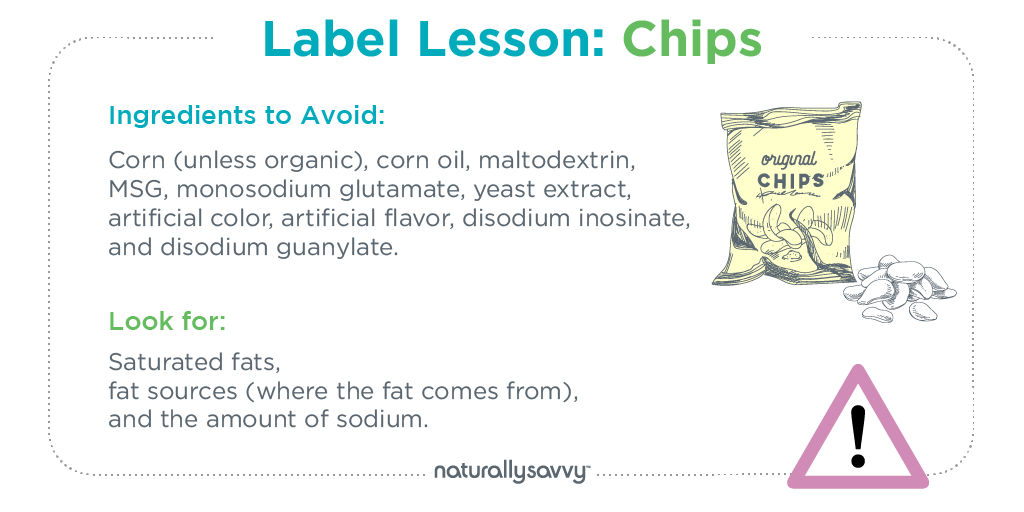
Check out more Label Lessons and Savvy Swaps.
The post Label Lessons: Chips appeared first on lifesfouhealth.com.
]]>The post Label Lessons: Whole Thing appeared first on lifesfouhealth.com.
]]>Labels can be tricky, especially if they say something like “low calorie” or “low sugar.” These claims generally refer to individual servings. But what happens when you eat the whole package? Well, this involves some elementary math, which can add up quickly.
There are also some loopholes around trans fats and how they are labeled. It's because of this that allows companies to write "0 trans fat" on the nutrition facts panel if there are less than 0.5 grams per serving. I repeat, PER SERVING! So once again if you eat the whole thing you could unknowingly be eating trans fats.

See more Label Lessons.
The post Label Lessons: Whole Thing appeared first on lifesfouhealth.com.
]]>The post [Label Lesson] Pickles appeared first on lifesfouhealth.com.
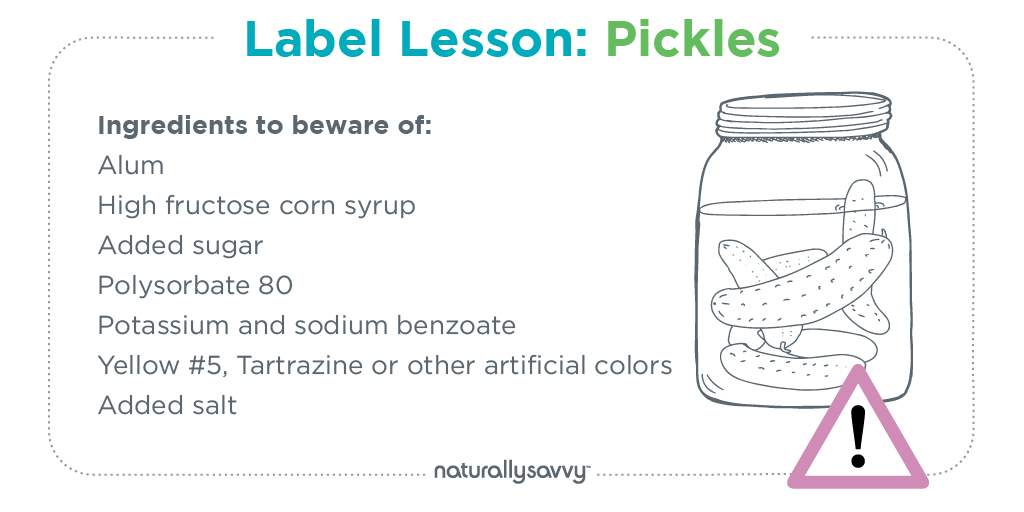
]]>It's super easy to make your own pickles at home or choose ones that are in the refrigerated section of the grocery store as they are usually preservative free.
The post [Label Lesson] Pickles appeared first on lifesfouhealth.com.
]]>The post Label Lessons: Soup appeared first on lifesfouhealth.com.
]]>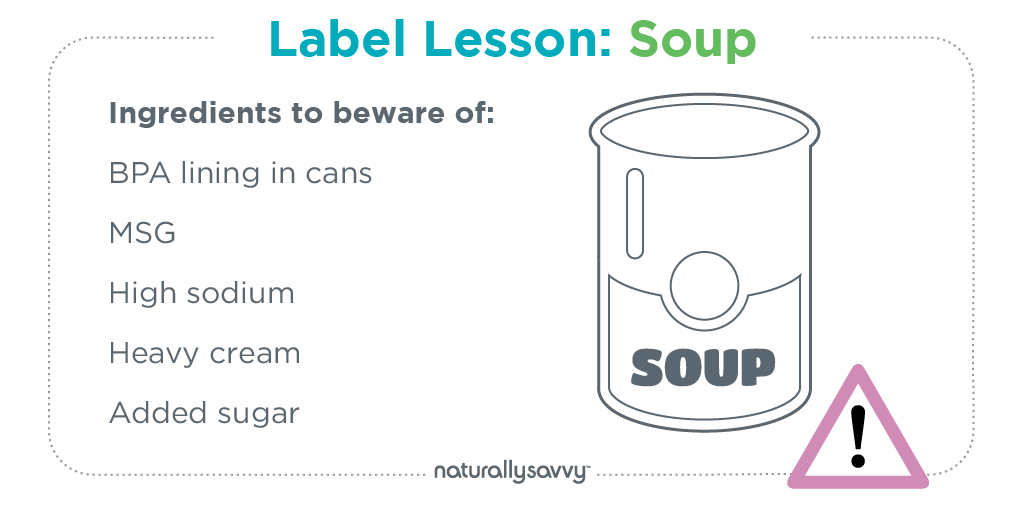
We suggest that you try and keep your consumption of canned soup to a minimum. Many grocery stores have homemade soups that have healthier ingredients and you can find these in the refrigerated or freezer section.
If you are making homemade yourself we have some recipes to inspire you here.
Also, check out our other Label Lessons.
The post Label Lessons: Soup appeared first on lifesfouhealth.com.
]]>The post Label Lessons: Yogurt appeared first on lifesfouhealth.com.
]]>We love cashew yogurt and often will buy plain greek style yogurt because it is higher in protein as well as being very low sugar. If you find it too plain you can mix in some fresh fruit and a little bit of maple syrup if you want a sweeter version.

See more Label Lessons.
The post Label Lessons: Yogurt appeared first on lifesfouhealth.com.
]]>The post Label Lessons: Sandwich Meat appeared first on lifesfouhealth.com.
]]>Now I choose preservative-free sandwich meat and often skip the bread. I love topping a salad with shredded meat or even wrapping meat with some mustard inside a piece of lettuce for lunch.
Keep a copy of this Label Lesson handy next time you are at the store.

More Label Lessons.
The post Label Lessons: Sandwich Meat appeared first on lifesfouhealth.com.
]]>The post Label Lessons: Salad Dressing appeared first on lifesfouhealth.com.
]]>When you do reach for bottled salad dressing at the store keep this list handy for ingredients to avoid.

Learn more about Harmful Food Additives in Salad Dressing
Salad dressing recipes:
Summer Salad Ideas Plus a Salad Dressing Recipe!
Simple red wine vinegar salad dressing
The post Label Lessons: Salad Dressing appeared first on lifesfouhealth.com.
]]>The post Label Lessons: Flavored Sunflower Seeds appeared first on lifesfouhealth.com.
]]>
It’s easy to roast your own sunflower seeds and have fun with flavoring them with any spices you have on hand like dill, pepper, or sea salt.
Enjoy.
More Label Lessons
The post Label Lessons: Flavored Sunflower Seeds appeared first on lifesfouhealth.com.
]]>The post Label Lessons: Sugar Free Ice Cream appeared first on lifesfouhealth.com.
]]>There are also other ingredients in all ice cream that people should be on the lookout for like dairy if you are sensitive to it and artificial flavors and colors that can lead to behavioral changes in some kids.
You could also consider buying an ice cream maker and creating your own delicious recipes where you can control the amount of sugar added.
Here are some recipes to try:
Vegan Dairy Free Beautiful Berry Nice-Cream
4 Dairy-Free Ice Cream Recipes

More Label Lessons.
The post Label Lessons: Sugar Free Ice Cream appeared first on lifesfouhealth.com.
]]>The post Hand Sanitizer: Friend and Foe appeared first on lifesfouhealth.com.
]]>But then there are real-life situations. Soap and water aren’t always available when they’re needed, it’s difficult to get children to wash their hands correctly, you’re in a hurry and tell yourself you’ll do it later, and so on.
Hand sanitizer is often thought of as a substitute for soap and water hand washing, and it can be much more convenient. You can keep a small bottle of sanitizer or wipes in your car, purse, desk, pocket, beach bag, and you’re ready to go. You may feel safe and secure when using these products, but have you read the ingredients on the label of your favorite hand sanitizer lately? Is that sanitizer friend or foe?
Read about are you washing your hands wrong?
If you want to be sure you and your family are using a safe and effective hand sanitizer, then you should know which ingredients to avoid. The good news: there are several excellent, safe hand sanitizers on the market that you can pack into your bag. But first, let’s read those labels!
Alcohol. Most hand sanitizers contain alcohol in the form of ethyl alcohol (or ethanol) or, in some cases, isopropyl alcohol. While soap and water kill germs on the skin by flushing them away, hand sanitizers remain on the skin and kill germs on contact and through evaporation, but only if there is at least 60 percent alcohol in the product. That’s a high percentage of alcohol.
Children who use alcohol-based hand sanitizers may ingest alcohol from their hands and risk poisoning. In fact, isopropyl alcohol is a neurotoxin as well as an eye and skin irritant. Alcohol also removes the skin’s natural oils, dehydrates skin cells, increases the risk of contact dermatitis, and may make you more likely to develop fine lines and wrinkles.
Triclosan. Also available as triclocarban, this is a toxic pesticide that you can find in personal care items such as soaps, toothpaste, and deodorants. Although it has antibacterial properties, it doesn’t kill cold and flu viruses. It may, however, disrupt hormone function, cause liver damage, and promote the development of cancer and super germs. In 2016, the Food and Drug Administration banned its use in antibacterial soaps, but not in hand sanitizers.
Read about FDA is concerned about triclosan in antibacterial soaps finally
Fragrances. That new hand sanitizer you just bought may have a nice scent, but is something foul going on? Basically, fragrances are a mystery to consumers because the industry isn’t required to let the public know the ingredients. Fragrance ingredients have been classified as neurotoxins, carcinogens, hormone disruptors, and allergens. Therefore, it’s best to avoid any hand sanitizer with a fragrance, natural or synthetic.
Methanol. Some hand sanitizers from Mexico may contain methanol, also known as wood alcohol. Methanol can be toxic when ingested or absorbed through the skin. When methanol is broken down in the body, formaldehyde and formic acid are produced, which can be deadly.
Phthalates. These colorless, odorless chemicals have been associated with autism spectrum disorders, breast cancer, type 2 diabetes, neurodevelopmental issues, and other health problems. Phthalates also help fragrances last longer in products. Manufacturers rarely list phthalates on labels, but if you see DBP, DEP, DEHP, BzBP, or DMP, you’ll know they’re there. The best tip is to avoid all phthalates as much as possible.
Parabens. Parabens are a variety of antimicrobial and preservatives that can be found in a wide range of cosmetics, foods, and personal care items. Their job is to stop the growth of fungus and bacteria in items, including creative toys, parabens are associated with health risks, including hormone disruption, reproductive problems, neurotoxicity, skin irritation, and cancer. Be sure to check labels for the word “paraben” and its different variations on the label.

Washing your hands with hot water and soap for at least 20 seconds is still the recommended way to fight germs. In fact, the Food and Drug Administration has proclaimed that there’s no evidence that hand sanitizers are more effective than soap and warm water. Some research even suggests hand sanitizers may actually increase the number of bacteria on your hands.
However, when soap and water hand washing isn’t possible, here are three nontoxic hand sanitizers you can try. Note that all three contain alcohol, but since the major concern about alcohol is ingestion by children, parents are urged to keep the products away from children who may try to ingest them. All three also get top ratings from the Environmental Working Group.
Hand sanitizers can have a role in helping support the fight against disease-causing microorganisms. However, you should be aware of the ingredients in any sanitizing products you buy. Washing with soap and warm water for at least 20 seconds is still highly recommended as a way to ward off germs. When you can't wash your hands have a safe hand-sanitizing product available.
The post Hand Sanitizer: Friend and Foe appeared first on lifesfouhealth.com.
]]>